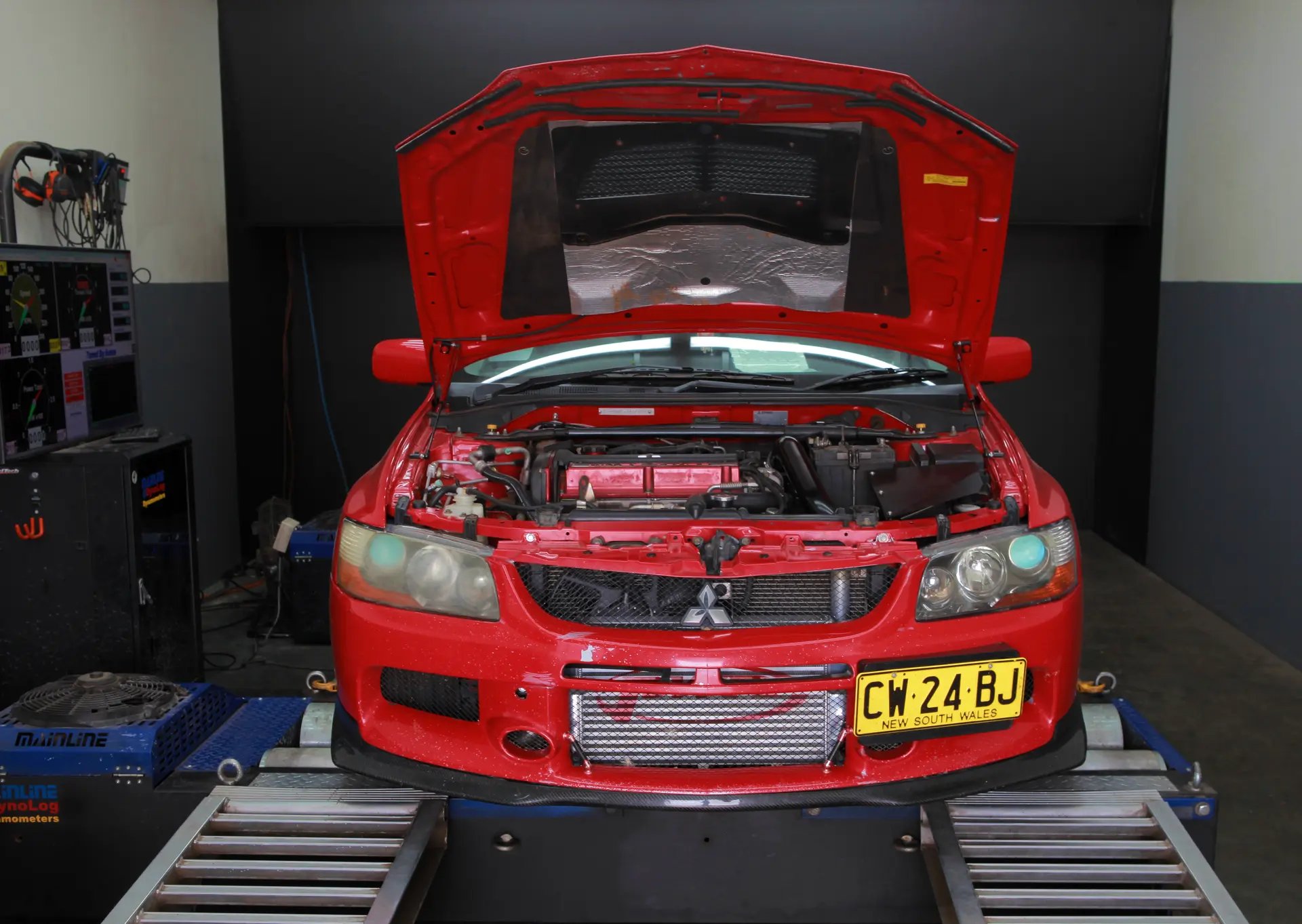
Mitsubishi Tuning Melbourne
Evo 1 through 10, Pajero, Eclipse Cross and beyond: the 4G63 and 4B11 are platforms we know inside out. Full standalone, factory ECU remap and TCU tuning available.
Mitsubishi Dyno Results
Your Mitsubishi Dyno Tuning Specialists.
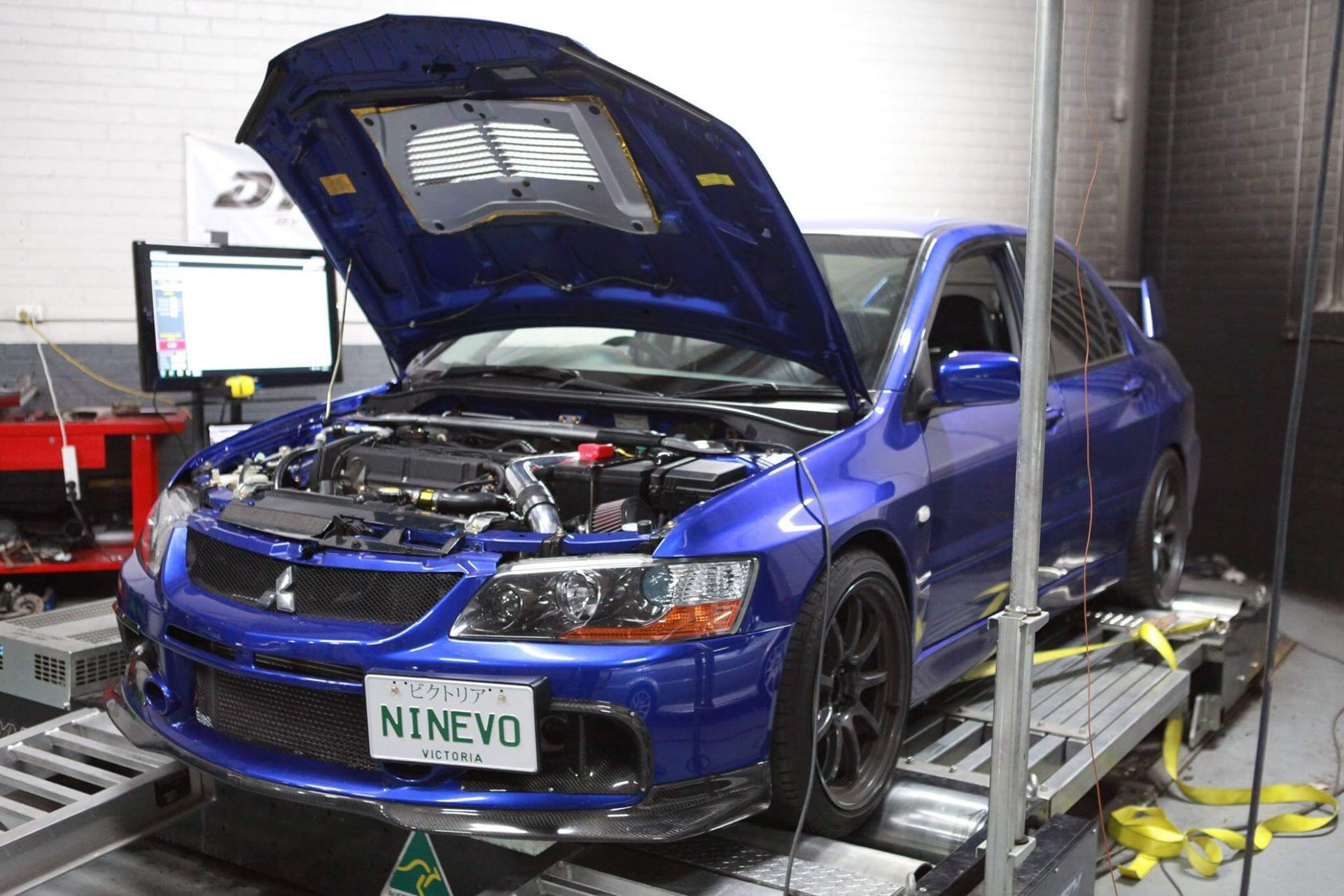
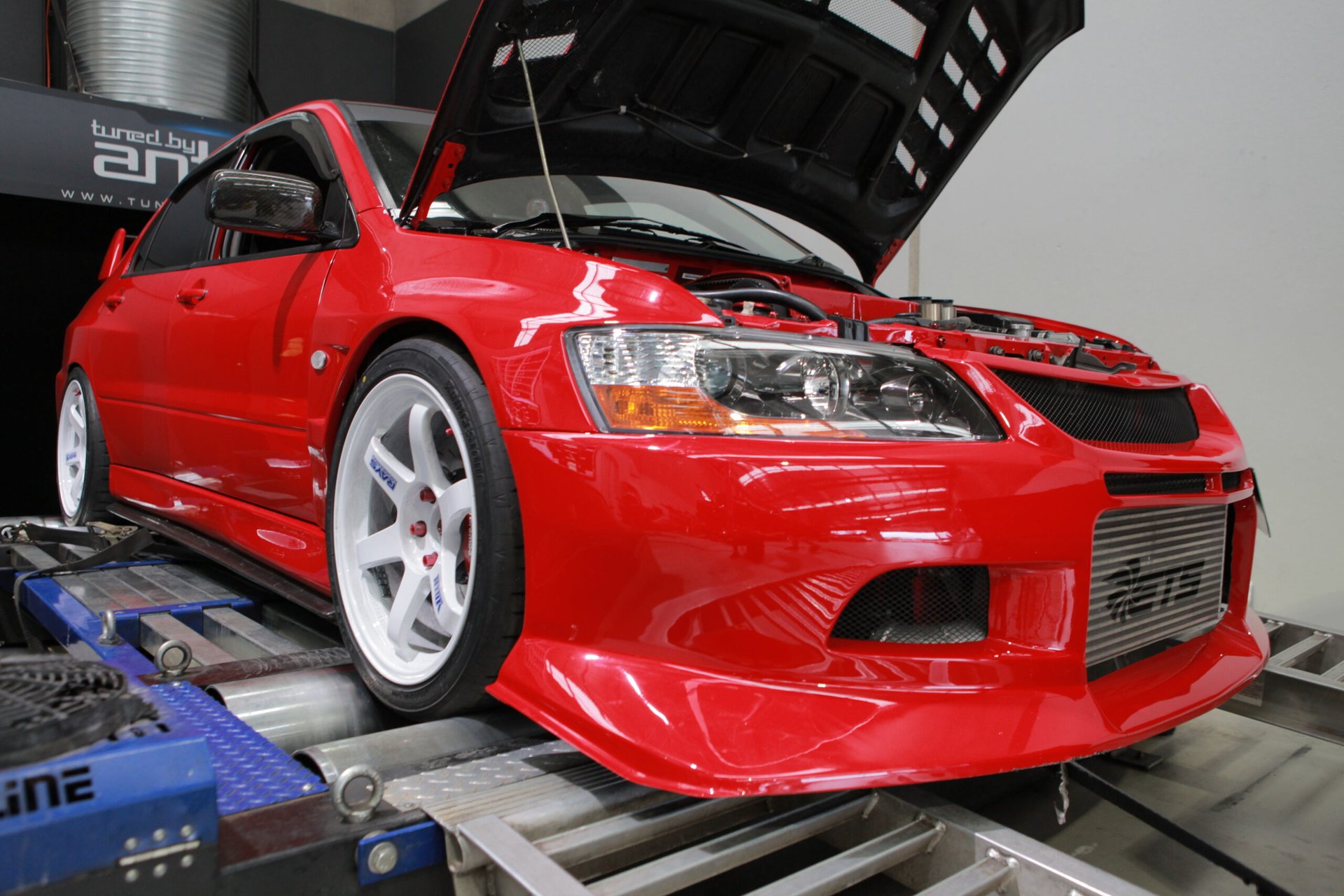
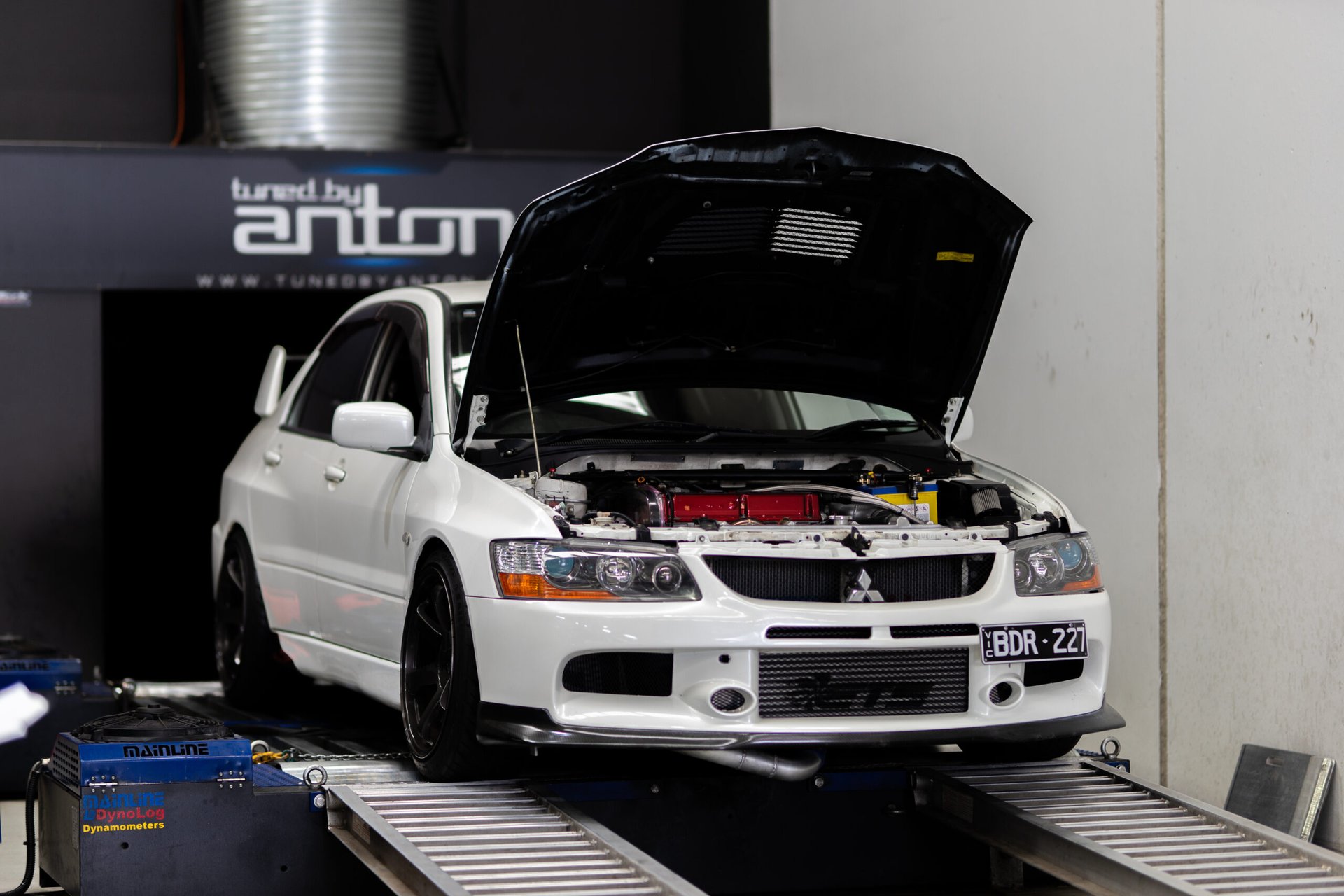
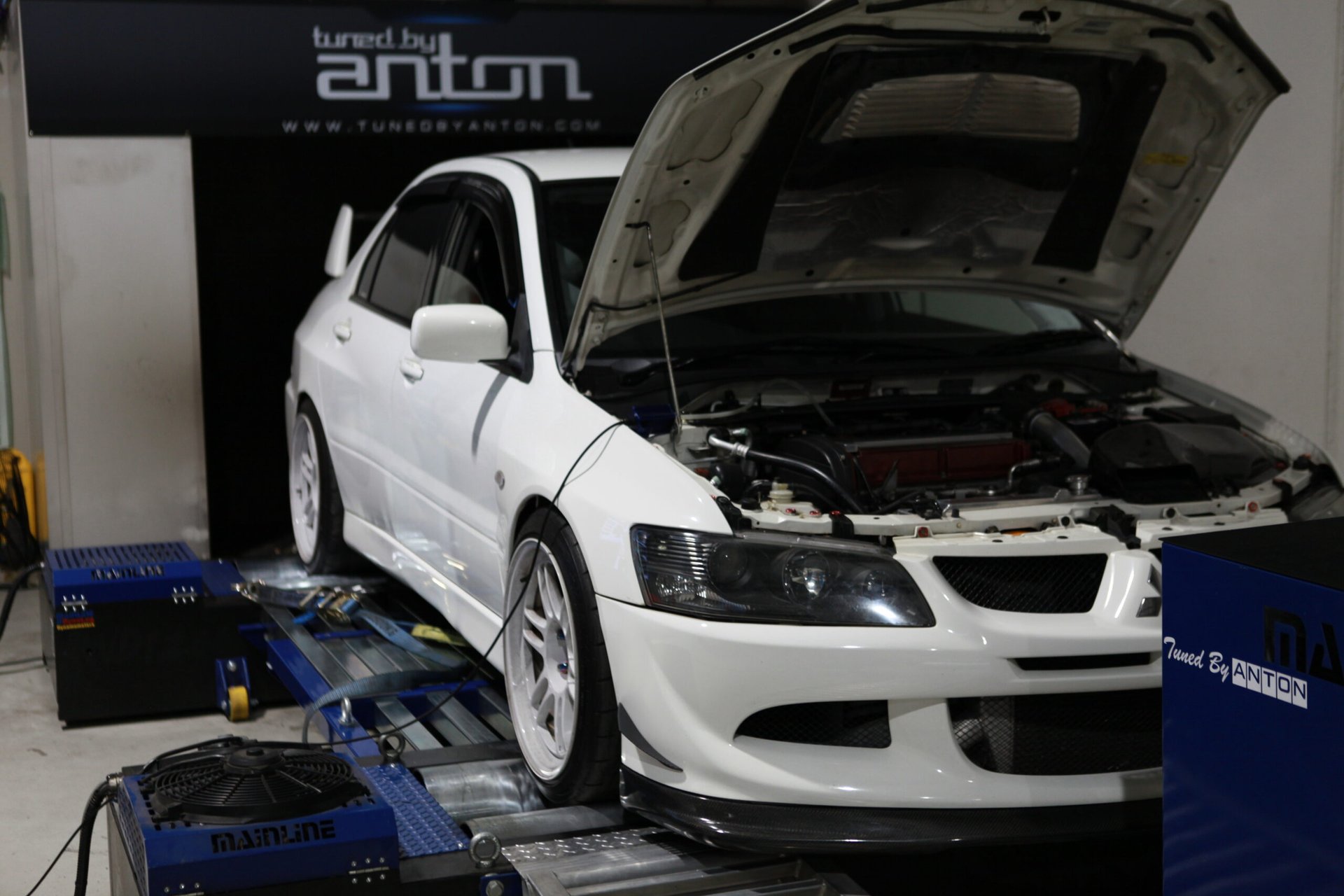
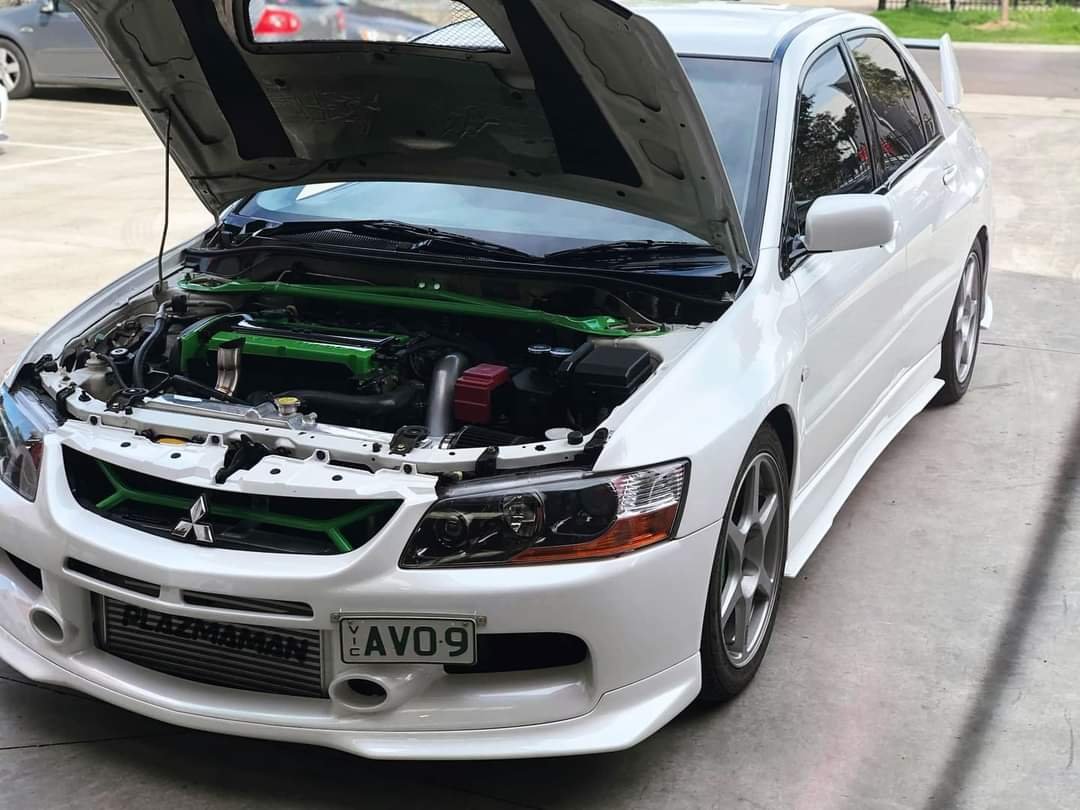
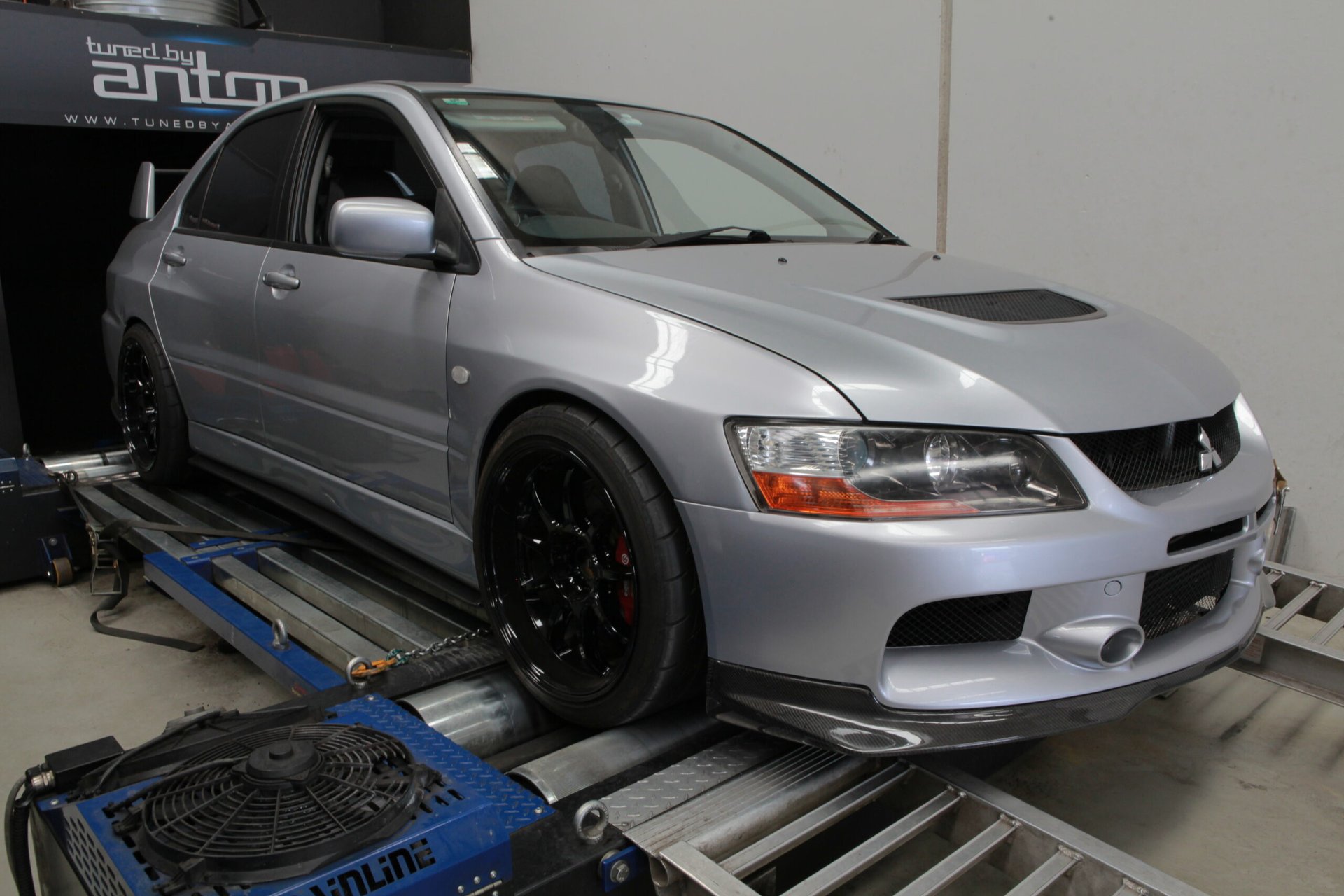
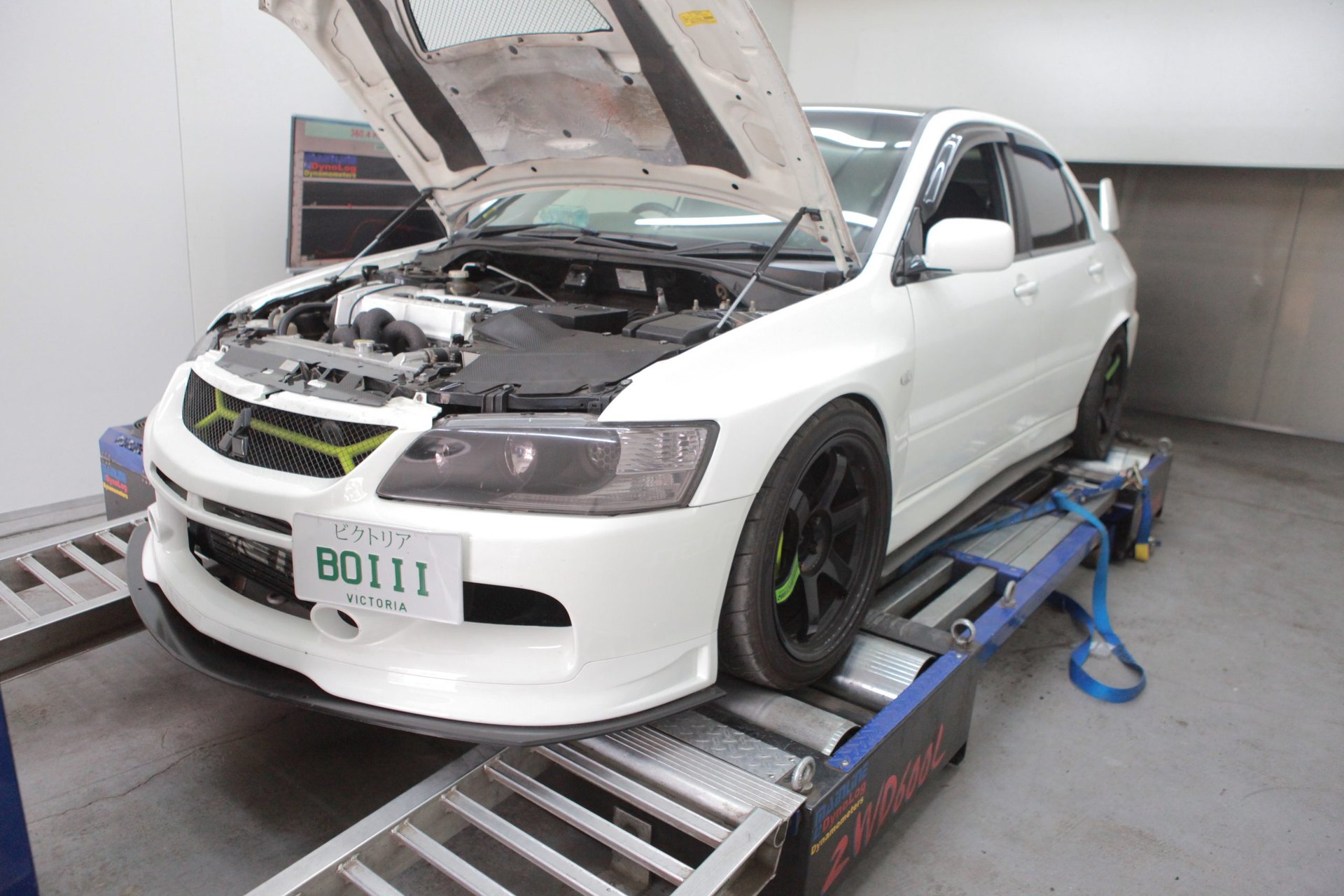
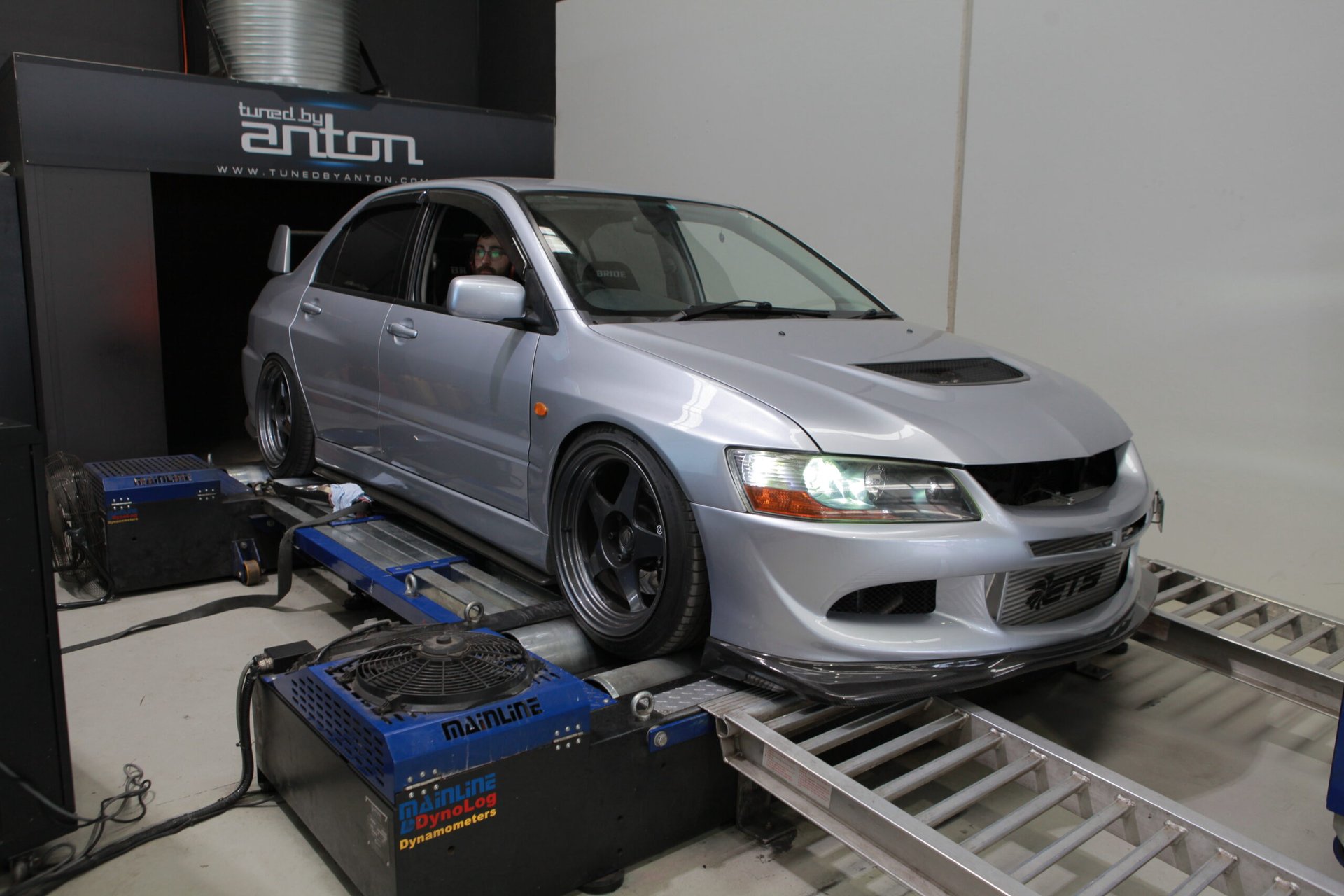
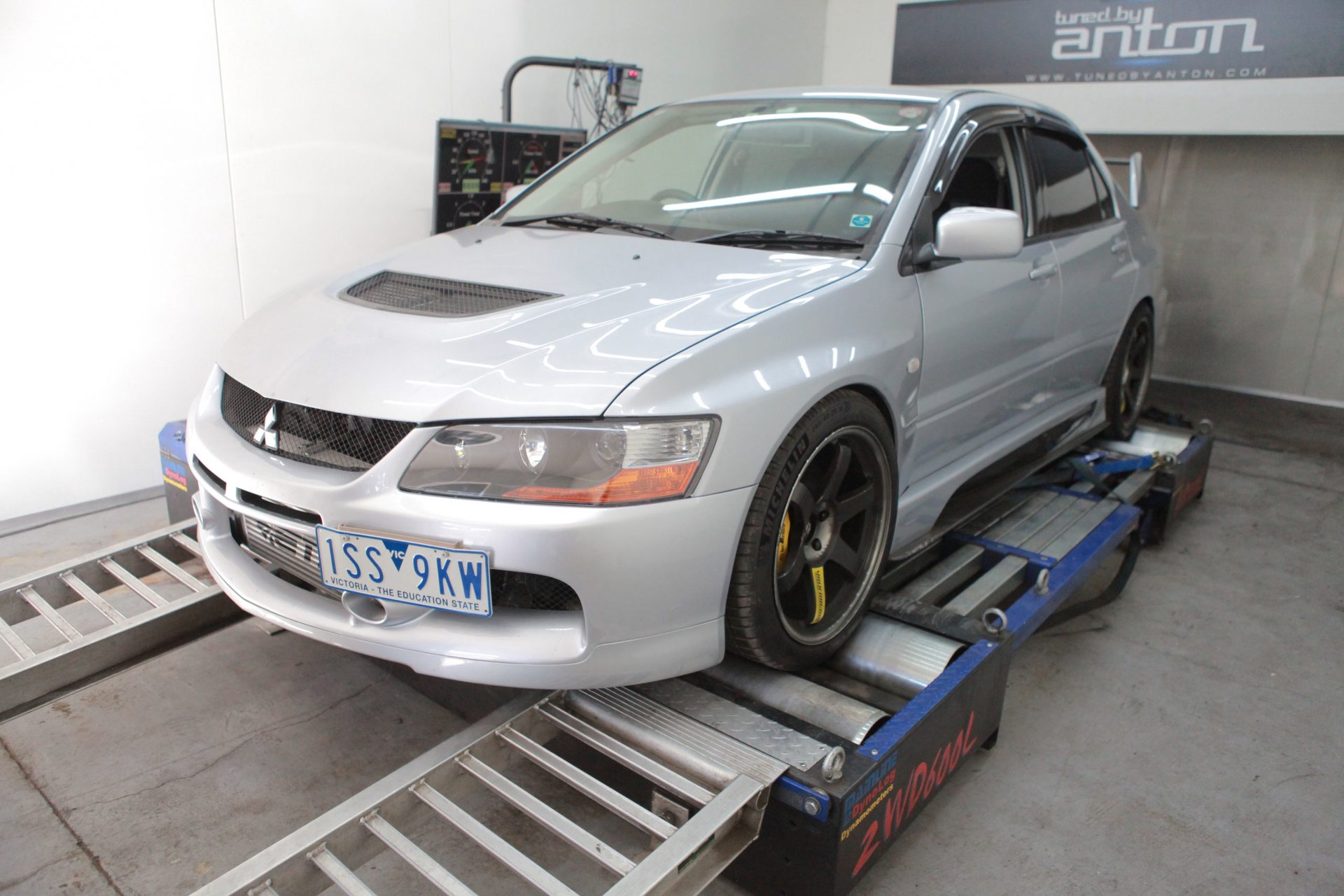
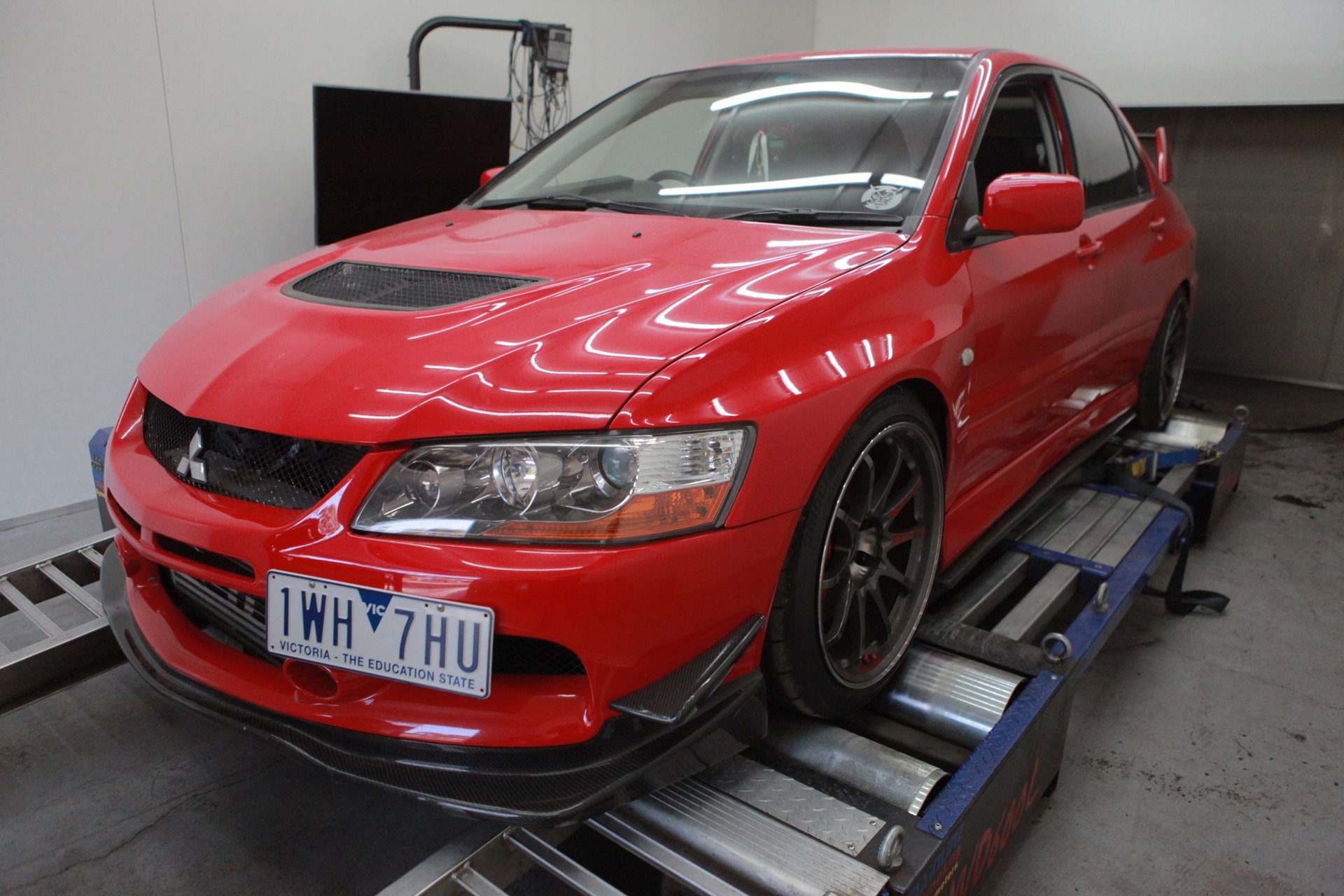
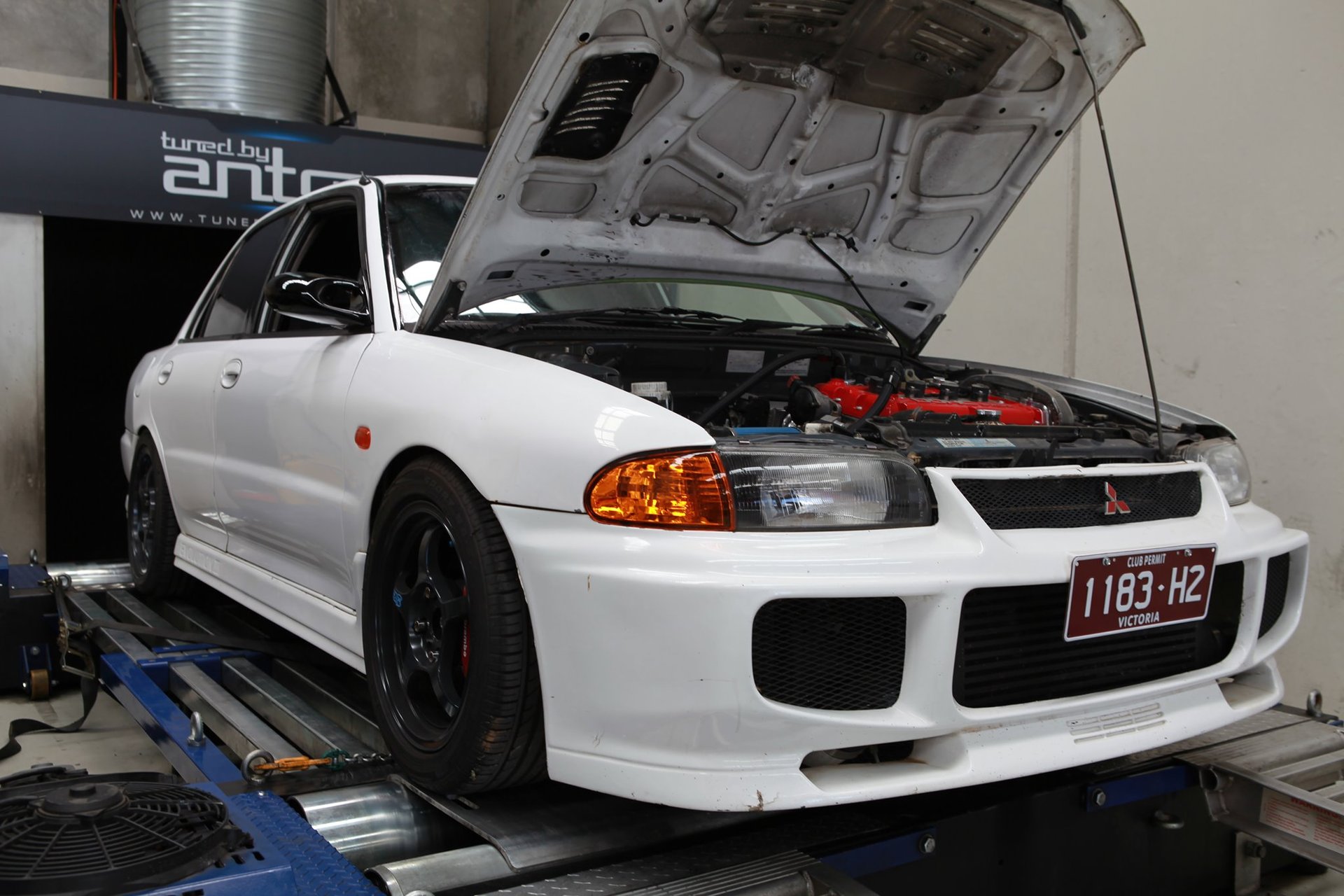
Mitsubishi Lancer GSR
VIEW DYNO RESULT →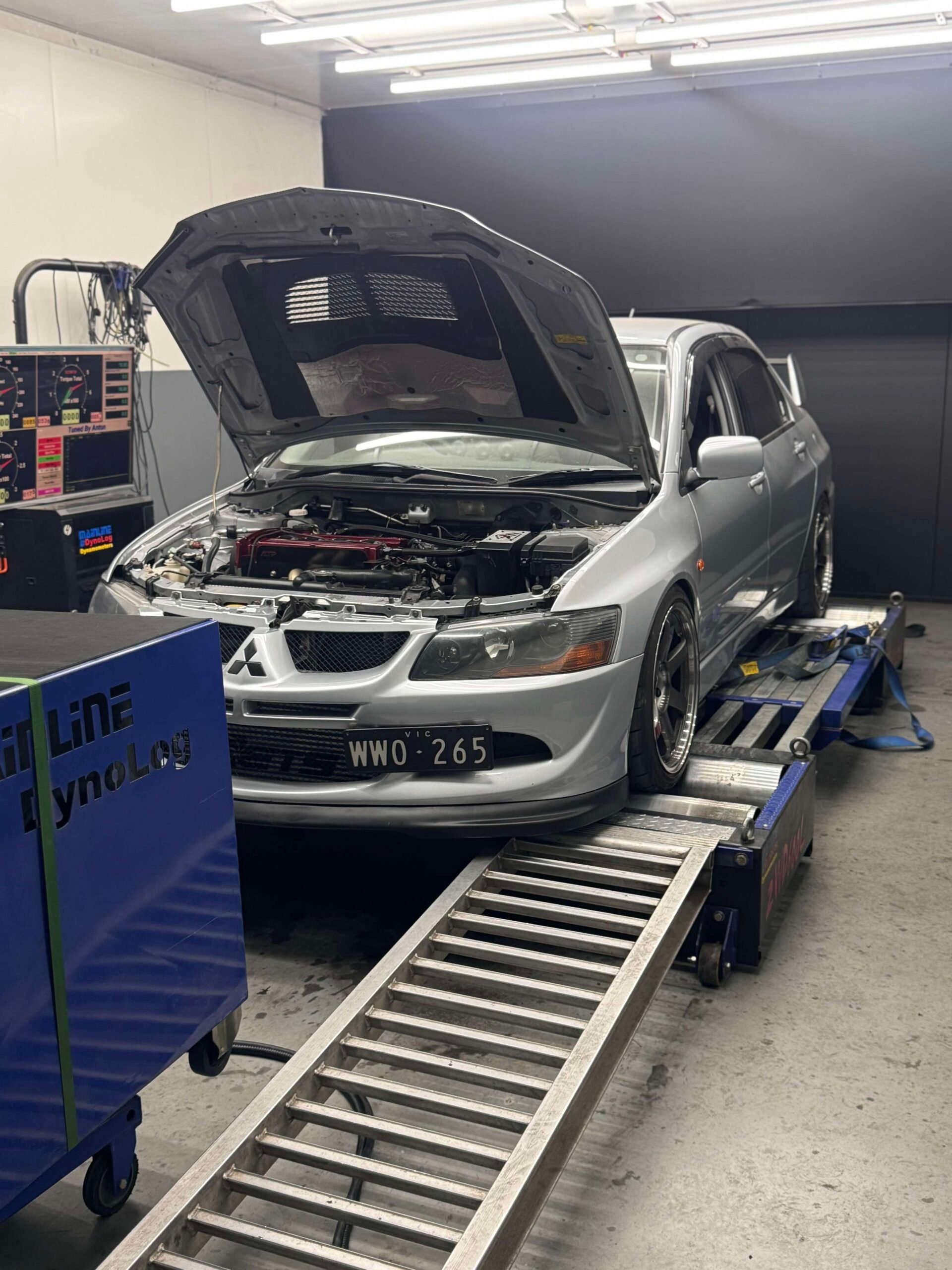
Mitsubishi Evo 8 with FP-Red Journal Bearing
Models We Tune
Popular Mitsubishi Models We Tune.
Evo builds are our speciality: from the 4G63-powered Evo 7–9 to the SST-equipped Evo 10, and Triton diesel tunes across all generations.
GET A QUOTE →Platform Overview
Tuning the Mitsubishi Platform.
Mitsubishi's Lancer Evolution is one of the great tuning platforms of all time. The 4G63T (Evo 4 through 9, 1996–2006) is a closed-deck, iron-block turbocharged four-cylinder that was deliberately underrated from the factory: Mitsubishi's own rally cars used the same fundamental block at three to four times the listed road-car power. Three decades of motorsport and aftermarket development means every aspect of the 4G63T is understood in depth: its precise knock sensitivity, the exact limits of the stock crank and rods, the flow capacity of the factory TD05H turbo, and how it responds to every calibration change. A standard 4G63T on a quality ECU remap with a bolt-in larger turbo is a 280–320kW at-the-wheels car on 98 RON. With E85, upgraded injectors, and a fuel pump, 380kW+ is achievable on a sensible stock bottom end build.
The 4B11T in the Evo X is a fundamentally different engine: aluminium construction where the 4G63 was iron, drive-by-wire throttle, and in most Australian-delivered cars the S-SST dual-clutch transmission. The S-SST has a reputation for poor performance in stock form: conservative shift strategies, overprotective overheating thresholds, and a tendency to cut power during spirited driving. A matched ECU+TCU tune on the Evo X is the minimum starting point: the S-SST responds well to calibration, with faster shifts, higher torque limits, and better launch control. Manual Evo X cars are straightforward ECU-only at Stage 1 and Stage 2.
The Triton diesel (4D56 2.5L in ML/MN, 4N15 2.4L in MQ/MR) is one of the most popular work-truck tune platforms we see. Both are common-rail turbodiesel engines with factory calibrations aimed at emissions compliance and broad fuel quality tolerance. A custom ECU remap raises peak torque in the 1500–3000 RPM range that matters most for towing and load carrying; the subjective improvement is substantial, and costs a fraction of mechanical modifications.
Typical At-Wheel Figures
Real Numbers. Mainline AWD.
At-wheel kW on 98 RON unless noted. Representative of results in our Epping workshop, though your car may vary.
| Engine / Models | Factory | Stage 1 | Stage 2 |
|---|---|---|---|
4G63T98 RON Evo 4–9, Lancer RS Turbo CT9A | ~145 kW | ~198 kW | ~255 kW |
Iron-block legend. Factory output was deliberately understated. E85 Stage 2+ unlocks 350kW+ territory. | |||
4B11T98 RON / E85 Evo X CZ4A (S-SST and manual) | ~195 kW | ~252 kW | ~298 kW |
S-SST cars: TCU tune is essential alongside ECU. Manual: ECU-only fine at Stage 1–2. | |||
4D56 2.5L dieselDiesel Triton ML/MN, Pajero NP/NS/NT | ~100 kW | ~135 kW | — |
Common-rail single-turbo. Towing torque improvement is the primary benefit. | |||
4N15 2.4L dieselDiesel Triton MQ/MR, Pajero Sport QE/QF | ~120 kW | ~158 kW | ~185 kW |
Modern common-rail direct injection. EGT monitoring recommended for heavy tow applications. | |||
Parts & Accessories
Mitsubishi Tuning Parts & Accessories.
Mitsubishi-specific performance hardware, sourced and fitted in-house.
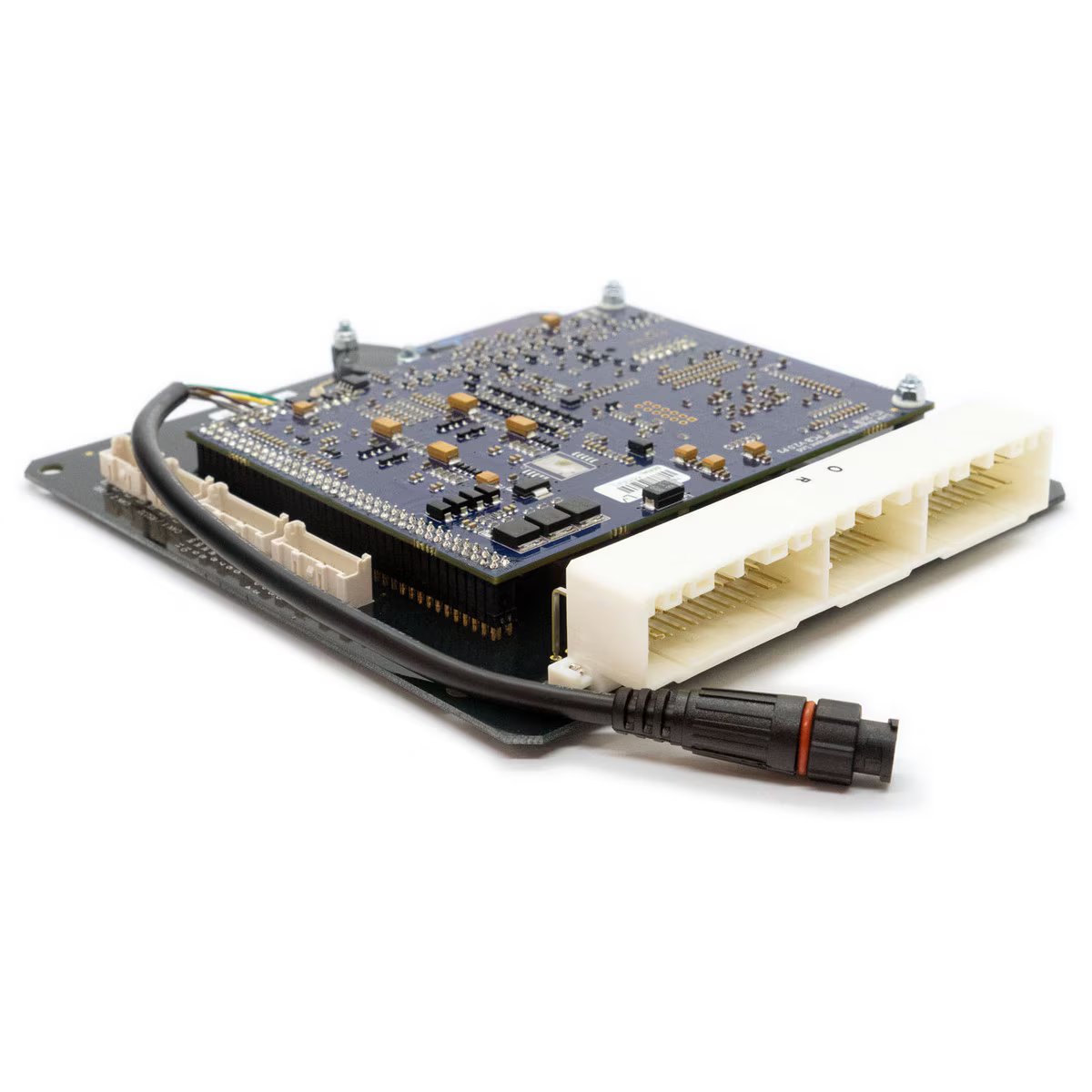
G4X EVOLink (I-III) - EVO3X Plug-In ECU
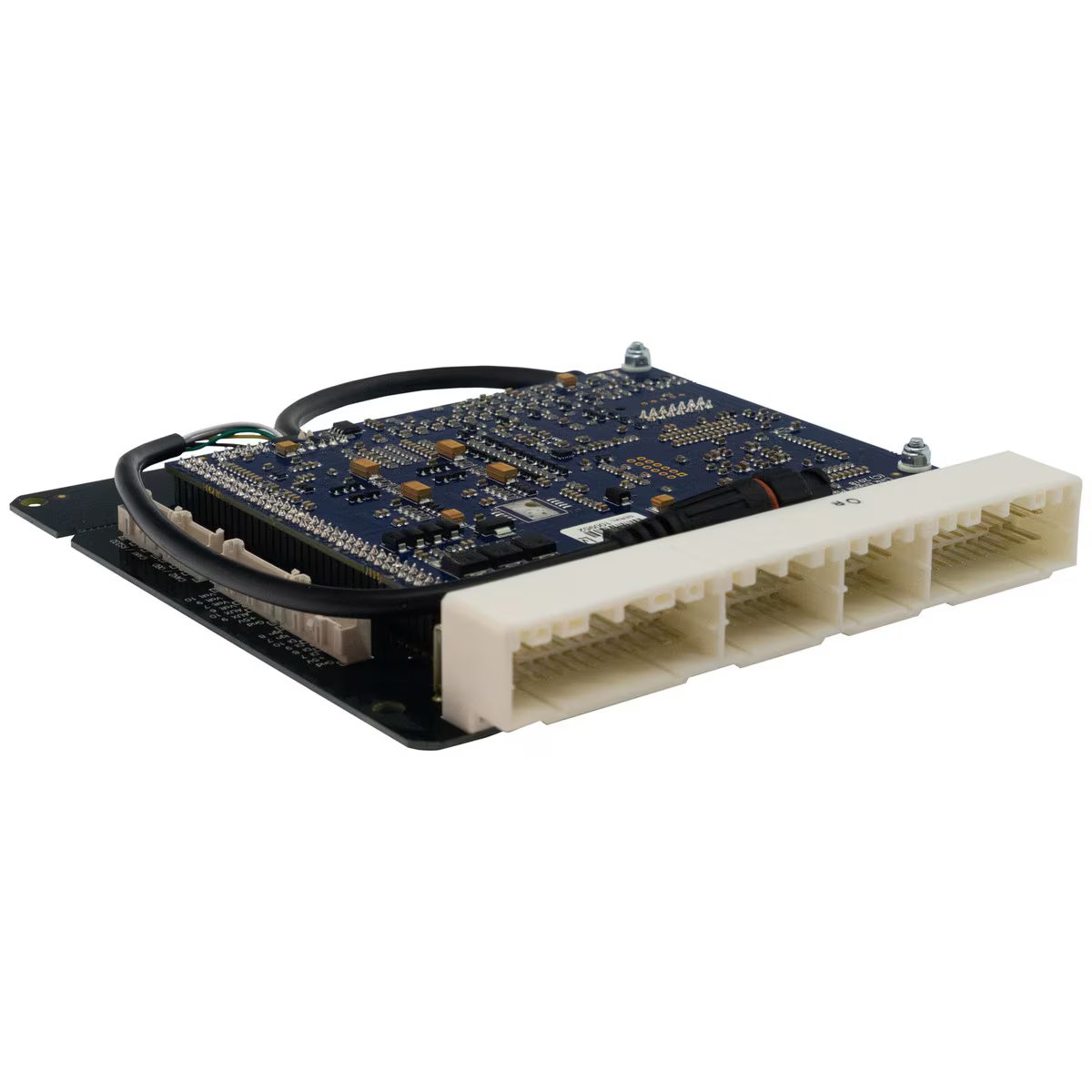
EVOLink (IV-VIII) - EVO8X
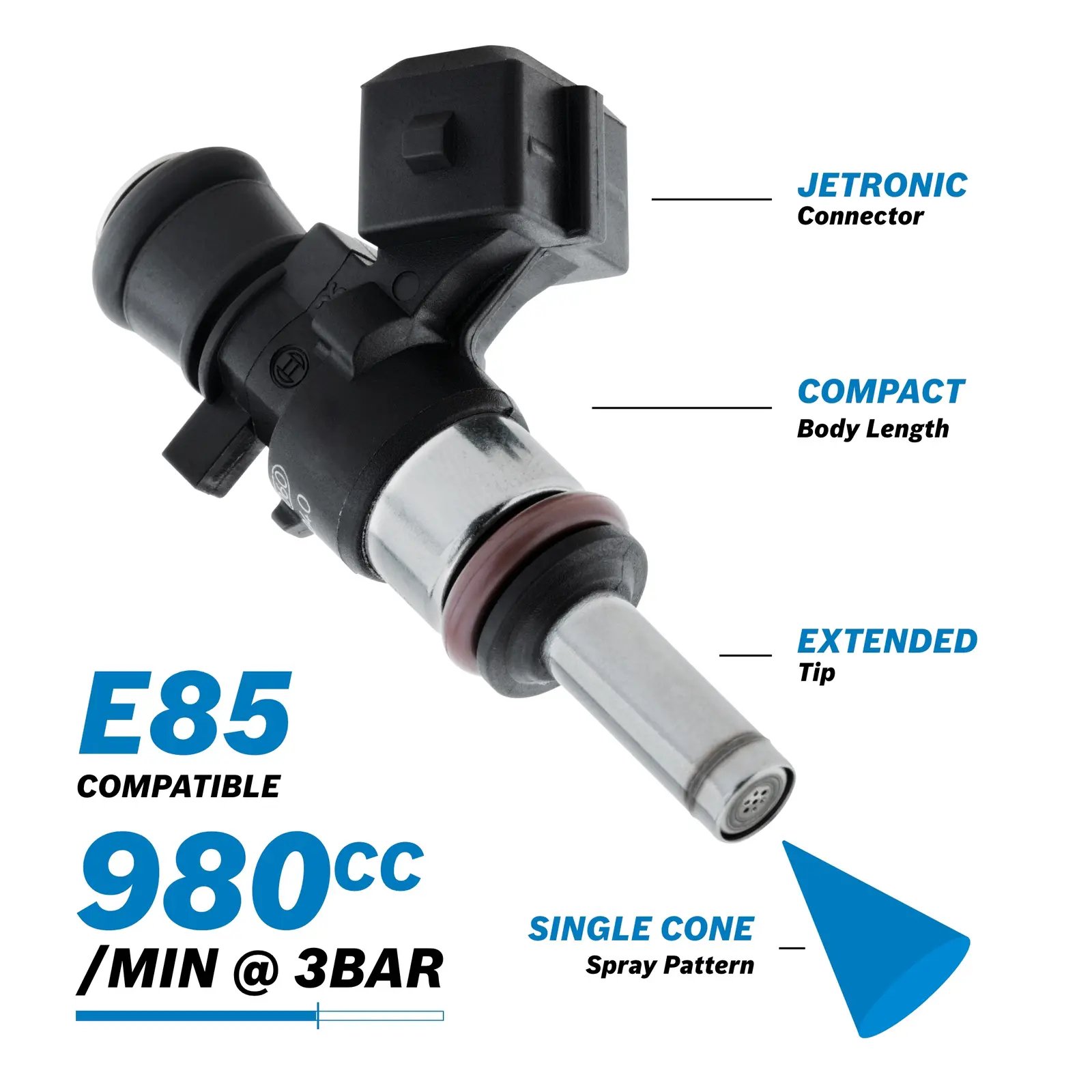
Bosch 980cc EV14 fuel injectors
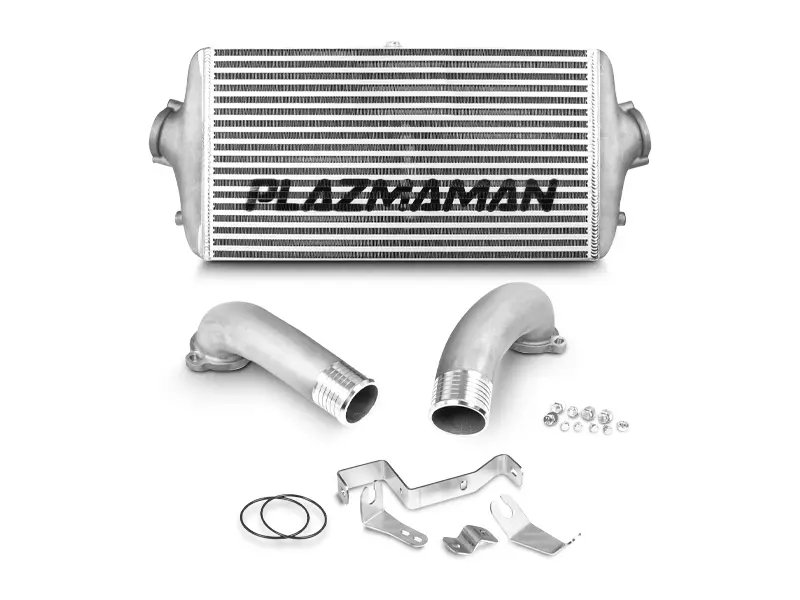
Plazmaman Triton MQ MR 2.4 2015+ Intercooler Upgrade
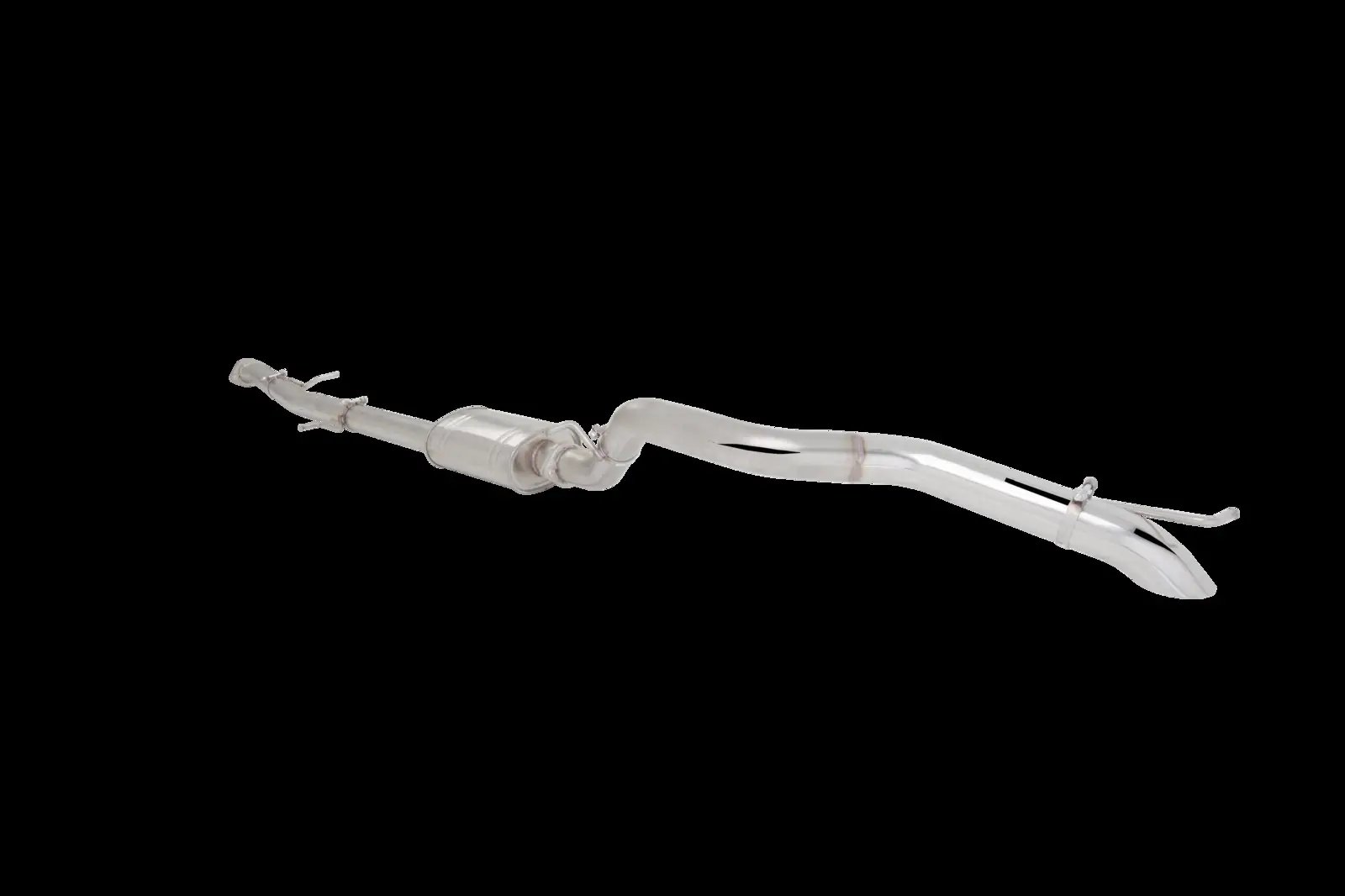
Xforce Mitsubishi Triton 2.4L TD Particulate Filter Back Exhaust
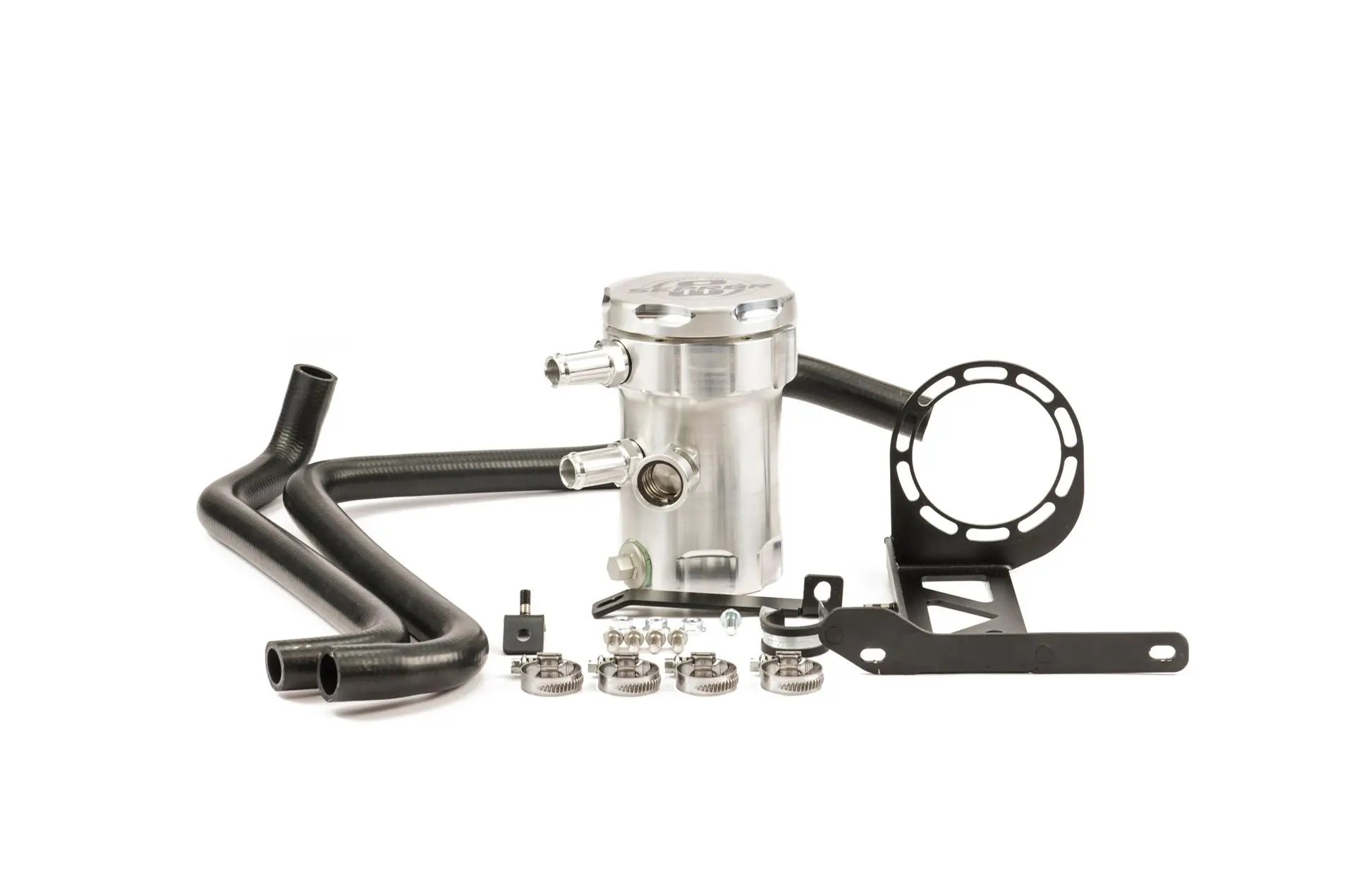
Terratuff SEPR8R Air Oil Seperator - Mitsubishi Triton MQ
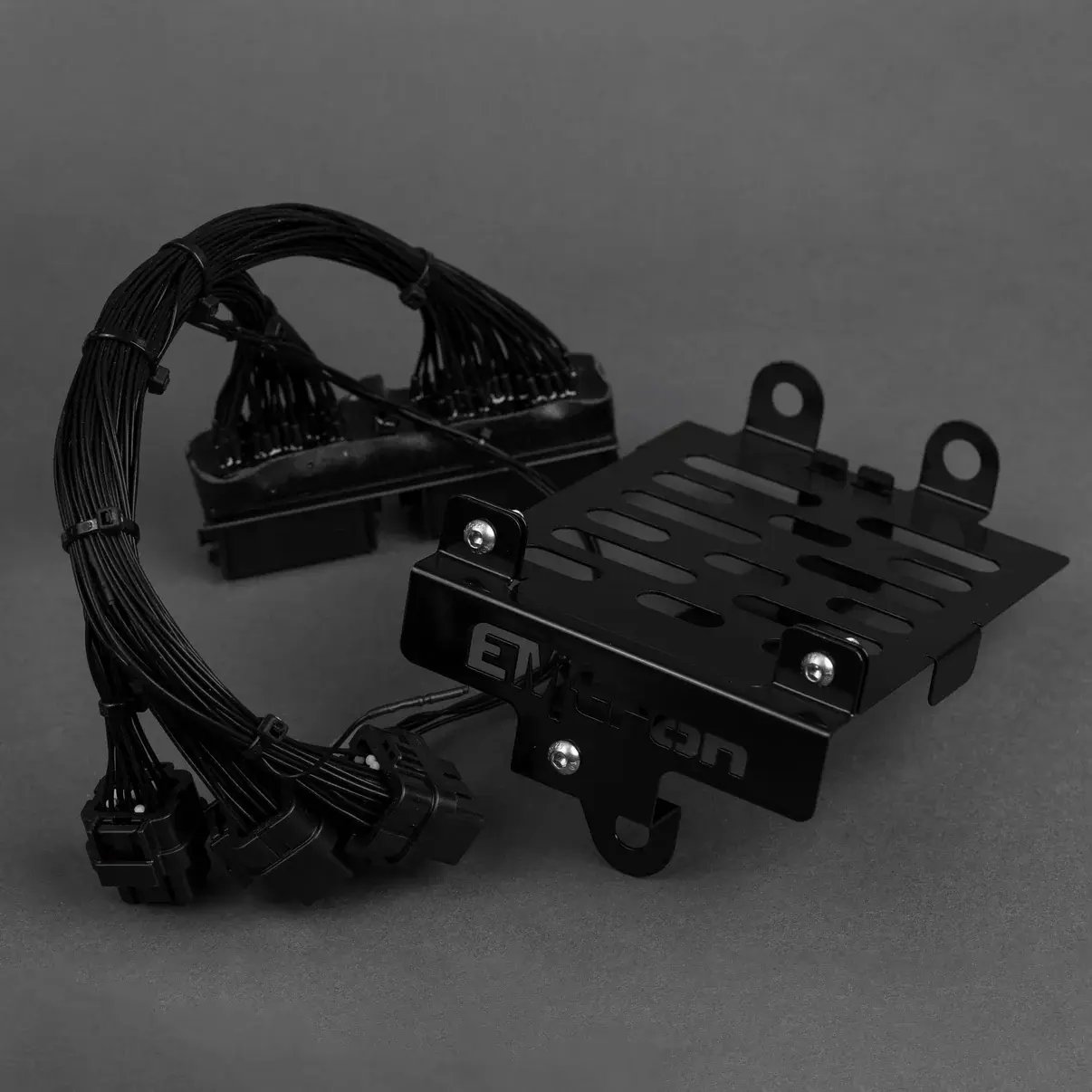
Emtron KV TO EvoX KIT (Less KV8)
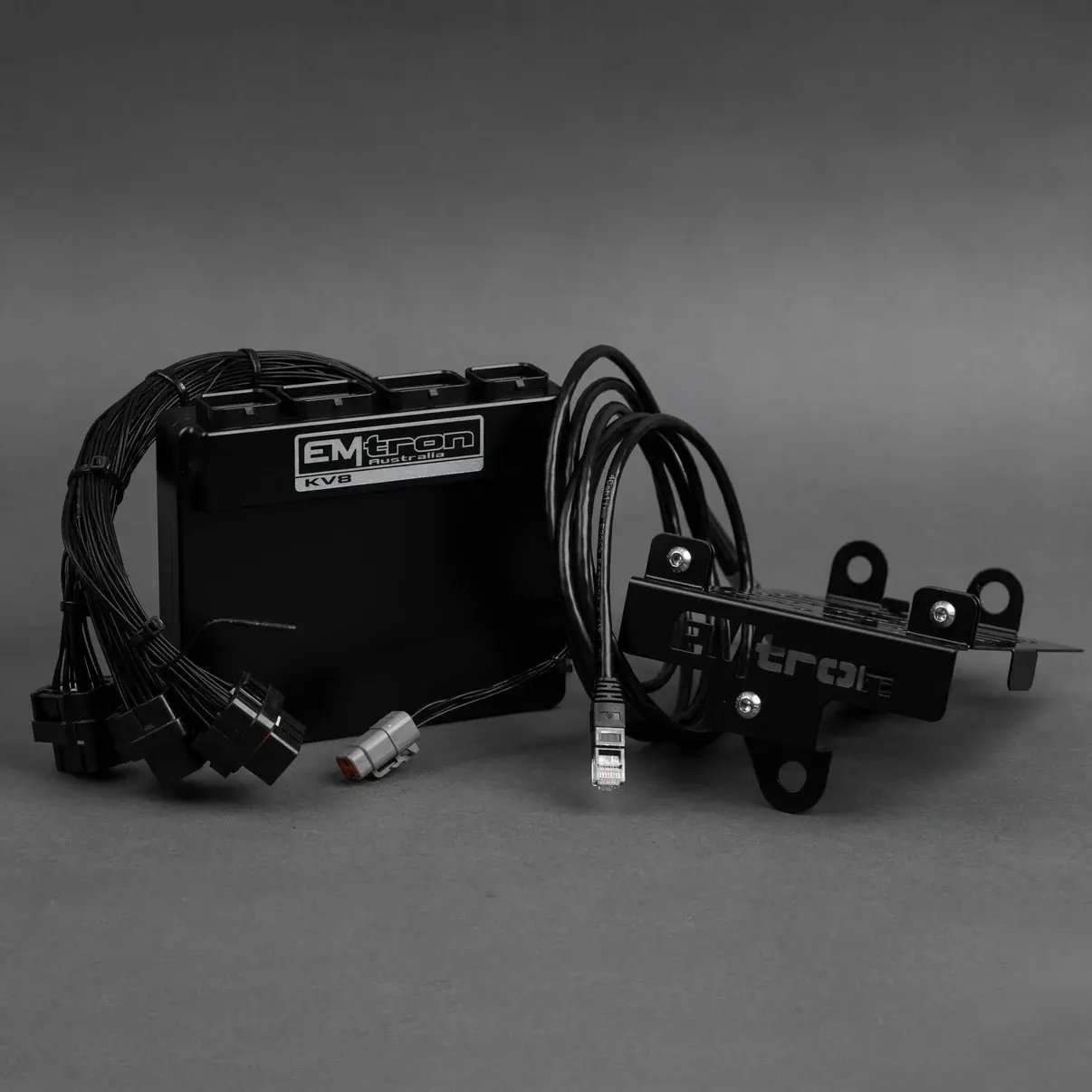
Evo X TO Emtron KV8 Kit
Mitsubishi Tuning FAQs
Common Questions.
What ECU platforms do you tune Mitsubishi on?
Mitsubishi work in our workshop runs on Haltech, Link ECU, Syvecs and MoTeC. Every calibration — factory ECU remap or standalone engine management — is developed on our in-house Mainline AWD dyno rather than loaded from an off-the-shelf file.
What's the difference between tuning a 4G63T (Evo 1–9) and a 4B11T (Evo X)?
The 4G63T is an iron-block closed-deck engine with a massive aftermarket and decades of proven development; it responds very predictably to tuning and has known, reliable limits. The 4B11T is an aluminium construction engine with drive-by-wire throttle, which makes it more precise but also more sensitive to calibration errors. The 4G63T generally has higher absolute power potential on a comparable budget. The 4B11T benefits significantly from the S-SST TCU tune; without it, the car doesn't realise the ECU tune's improvements through the drivetrain.
Do I need to tune the S-SST gearbox on my Evo X?
Yes, on an S-SST Evo X, a TCU tune is essential alongside the ECU remap. The stock S-SST calibration has conservative torque limits, slow shift strategies, and aggressive overheating protection that cuts power during sustained hard driving. Without a TCU tune, the gearbox actively limits what the tuned engine can deliver. A matched ECU+TCU calibration fixes the shift speed, raises torque delivery limits, improves launch control, and removes the premature heat-protection cut that plagues stock S-SST cars on the track.
How much power can a stock 4B11T Evo X make on a tune?
A stock 4B11T Evo X makes approximately 195kW at the wheels on our Mainline AWD dyno. A Stage 1 ECU tune (and TCU if S-SST equipped) typically produces 245–255kW. Stage 2 with a high-flow intake, intercooler, and downpipe takes this to around 290–300kW on 98 RON. The 4B11T's top turbocharger (TD05H-20G in Evo X RS/GSR) has good headroom, and an upgraded turbo opens the path to 350kW+ on E85 with supporting fuelling upgrades.
Is it worth tuning a Mitsubishi Triton diesel for towing?
Absolutely, a custom dyno tune on a Triton diesel is one of the highest-value modifications available for work truck owners. The factory 4D56 or 4N15 calibration is set conservatively for emissions compliance and broad market fuel tolerance. A custom ECU remap raises torque delivery in the 1500–3000 RPM range where the truck operates under towing load; the improvement is immediately noticeable when pulling a trailer on a hill. We always verify exhaust gas temperatures under load to ensure the tune is safe for sustained heavy towing.
What stage is safe on a stock 4G63T bottom end?
The stock 4G63T bottom end (crank, rods, pistons) in factory form is generally considered safe to around 270–290kW at the wheels on a quality custom tune with 98 RON and appropriate ignition advance. Beyond that level, the factory rods become the limiting factor: aftermarket rods (Manley, Eagle, K1) are the standard fix and unlock the path to 350kW+ safely. Head studs and a quality head gasket are also recommended before sustained high-boost operation regardless of bottom end upgrades.